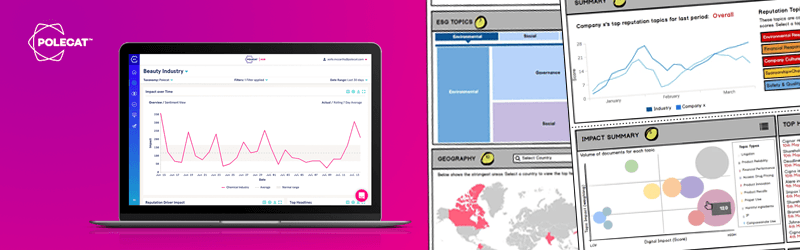
RepVault SaaS Platform — UX & Interaction Design Case Study
This UX case study explores the redesign of the RepVault homepage for Polecat Intelligence. The project focused on interaction design, SaaS dashboard UX, and user research to improve how organisations interpret reputation risk data.Polecat Intelligence is a Software-as-a-Service company specialising in reputation risk analysis. As Lead UX Designer, I was responsible for improving the user experience across RepVault and the wider Polecat Hub — shaping how clients access, interpret and act on complex reputation data.
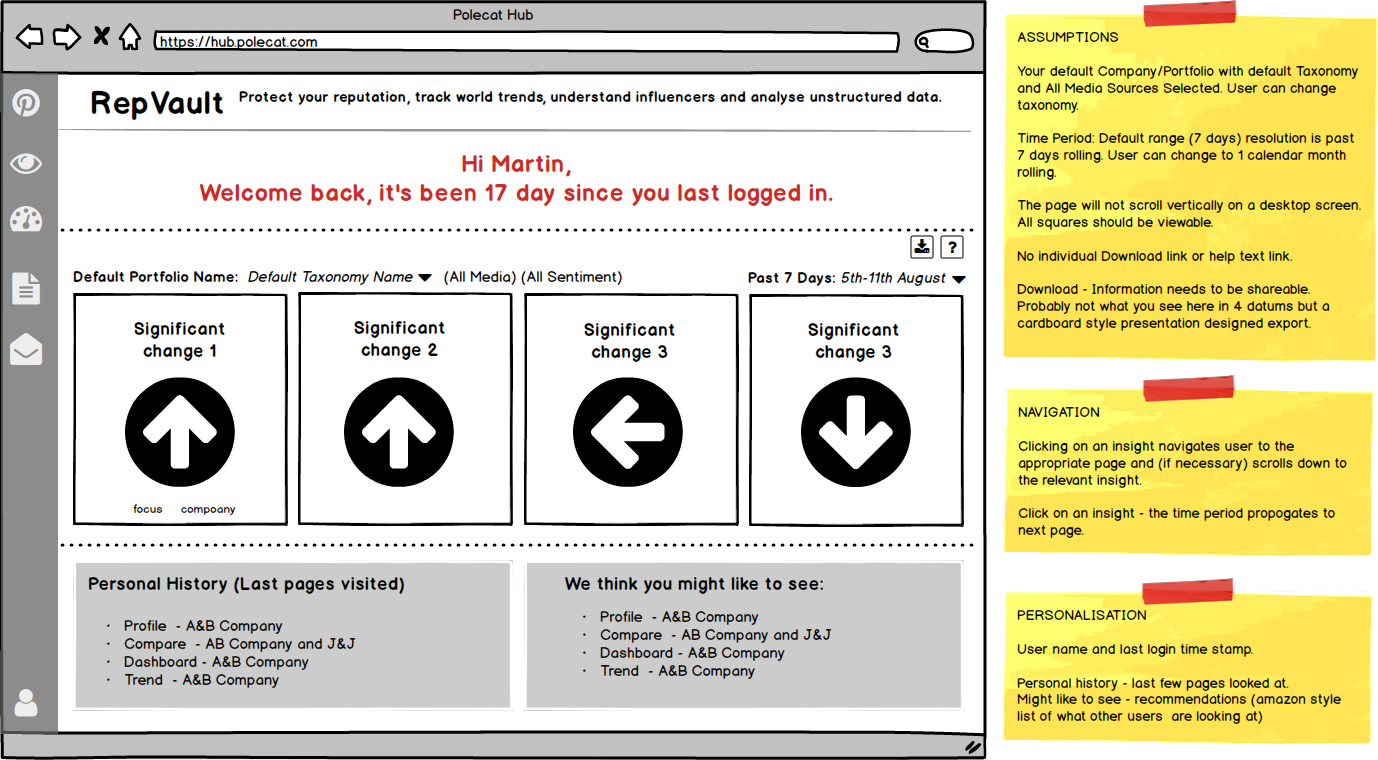
This case study focuses on redesigning the Hub homepage to provide clearer insight, stronger prioritisation and a more meaningful “at-a-glance” experience for users.
Project overview
RepVault provides organisations with insight into their reputation risk profile using advanced data analysis and sentiment modelling. The Hub homepage acts as the primary entry point into this ecosystem of tools and insights.
While functional, the existing homepage operated largely as a navigation layer. It lacked strategic insight and did not immediately surface high-value information relevant to clients.
- Role: Lead UX Designer
- Sector: Private Sector / SaaS
- Focus: Homepage UX strategy, user research, insight prioritisation
UX design challenge
The original Hub homepage presented a list of applications with a welcome message. It did not reflect the depth or intelligence of the underlying product.
The challenge was to redesign the homepage so it:
- Delivered meaningful insight immediately on entry
- Reflected each client’s unique reputation profile
- Reduced friction in navigating to deeper analysis tools
- Balanced data density with clarity
My role
I led the UX strategy for the homepage redesign, working closely with a Product Designer and a Data Visualisation Engineer.
My responsibilities included:
- Concept development from initial sketches through to high-fidelity designs
- Designing and running structured user testing sessions
- Developing a UX strategy aligned with measurable product usage
- Presenting research findings and design direction to the Product Owner
Research & testing approach
Because the homepage needed to communicate complex reputation insight at a glance, we ran moderated research sessions to understand what users considered “high-value” information.
Participants
Six Polecat employees in user-centred roles, including Customer Service Managers.
Method
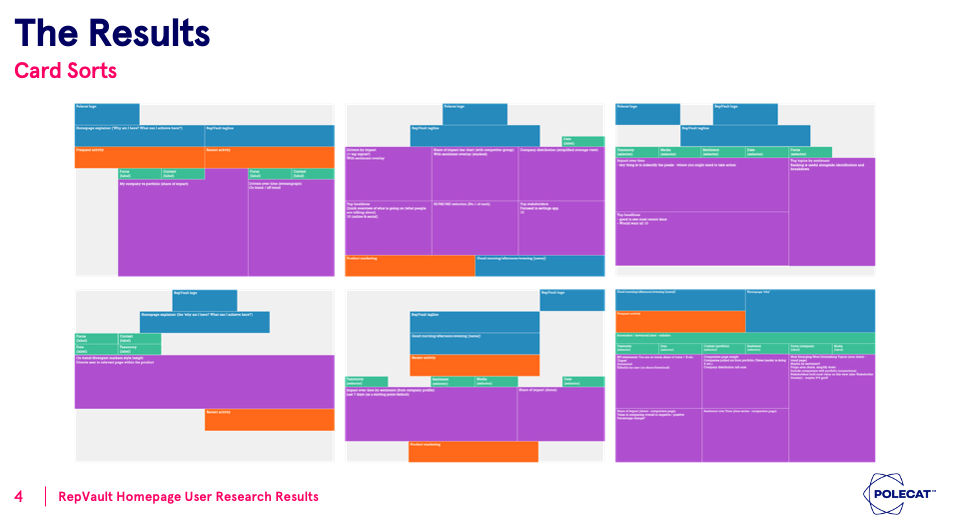
1. Modified Card Sort
Participants assembled predefined insight components within a structured grid. This exercise revealed priorities, trade-offs and expectations for a high-level reputation overview.
Key findings
- Minimal scrolling: The homepage should feel immediate and high-level.
- Three core insights maximum: More would dilute clarity.
- Share of Impact & key metrics: Consistently ranked as high-value data points.
- Sentiment analysis: Considered essential for contextual understanding.
- Time comparison: Users wanted visible change over time to provide baseline context.
- Clear taxonomy & date controls: Required for filtering and clarity.
Outcome
The redesigned homepage shifted from a static navigation screen to an insight-led dashboard experience. Users were able to access high-value metrics more quickly and navigate efficiently to deeper analysis tools.
Post-implementation metrics showed stronger click-through patterns and reduced dwell time on the homepage — indicating users were finding what they needed faster and progressing through their journey more efficiently.
To read more about the card sorting and resultsview the UX presentation.pdf.
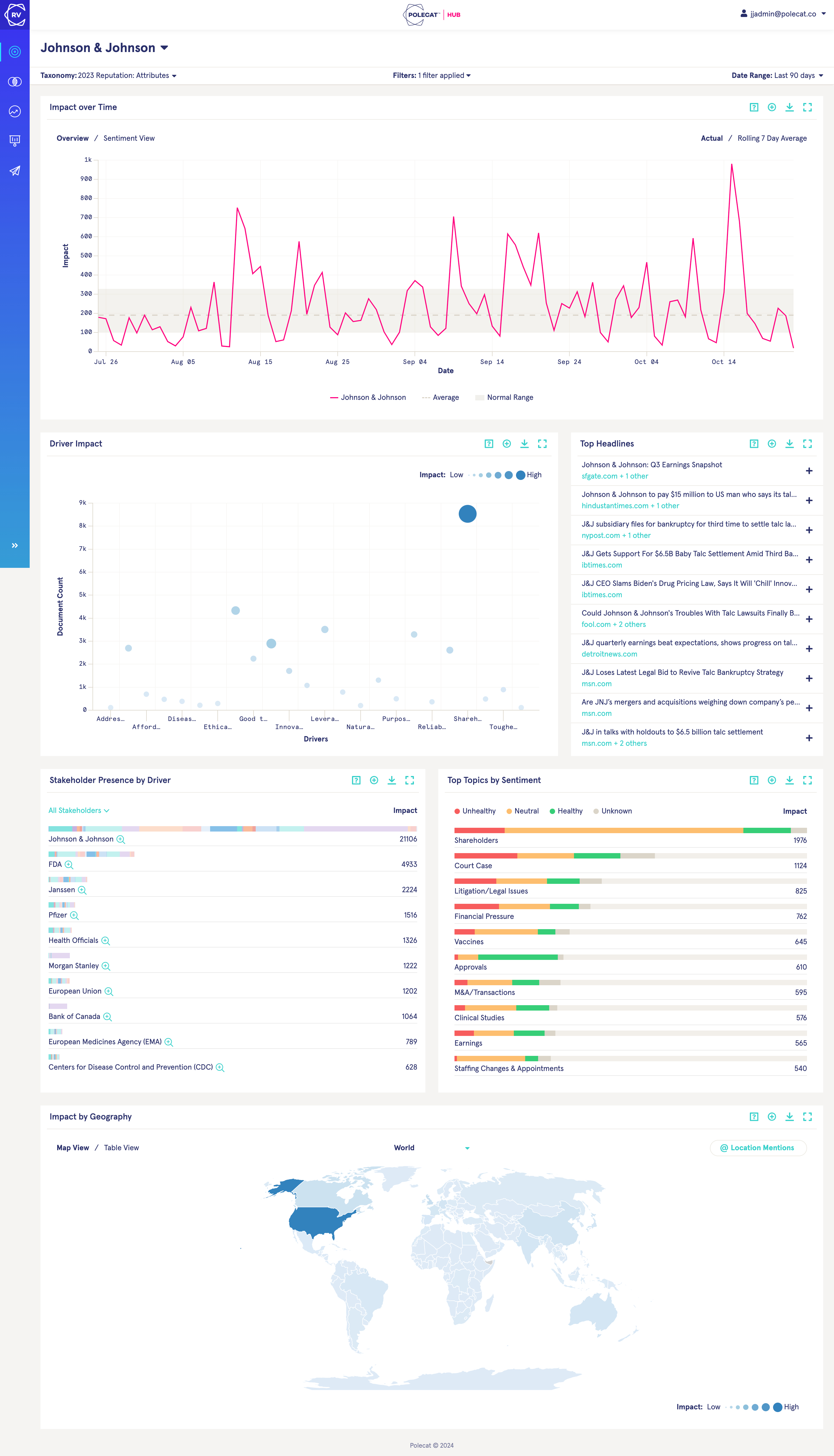
Explore related work on the Polecat Hub platform.
About the designer
Martin Gray is a UK-based web and interaction designer specialising in accessible GOV.UK services and complex digital platforms. Explore more web design case studies or learn more about Martin Gray.