Context and challenges
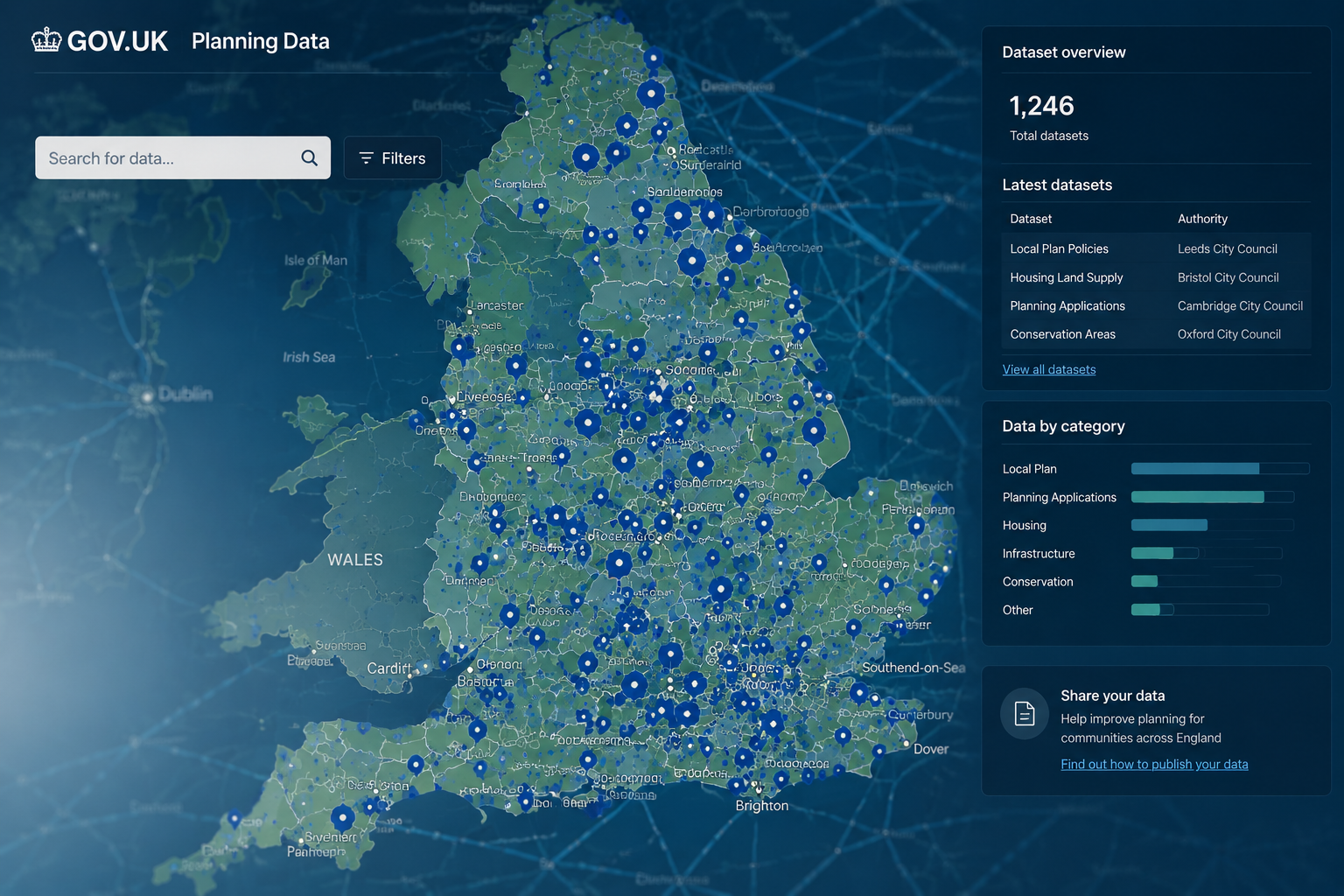
Planning data in England is published by hundreds of local authorities using different systems, formats and standards. This makes data difficult to find, compare and trust, while the process of contributing it is fragmented and inconsistent.
I worked in a strong User-Centered Design team on the Planning Data platform, helping shape how complex datasets are structured, accessed and understood. The goal was to support better planning decisions by making data more usable, accessible and consistent at a national scale.
Improving planning data publishing
Planning data was fragmented across multiple systems and formats, with no consistent way to publish or access it. Users struggled to locate relevant datasets, while local authorities faced unclear processes for contributing data.
This gap between availability and usability limited the value of the data for planning decisions.
- Data spread across multiple platforms and formats
- Inconsistent publishing standards
- High effort to find, interpret and trust datasets
The service needed to make it easier to publish high-quality data and to access and use it.
My role
As a Senior Interaction Designer, I worked across both early concepts and improvements to the live service. My focus was on simplifying complex data interactions and shaping user journeys that worked for both publishers and end users.
I collaborated closely with service design and user research to map journeys, test assumptions and iterate designs based on real user needs.
Designing for data publishers
The work focused on two parallel challenges: supporting local authorities in publishing data, and improving how users access and understand that data.
Supporting data publishers
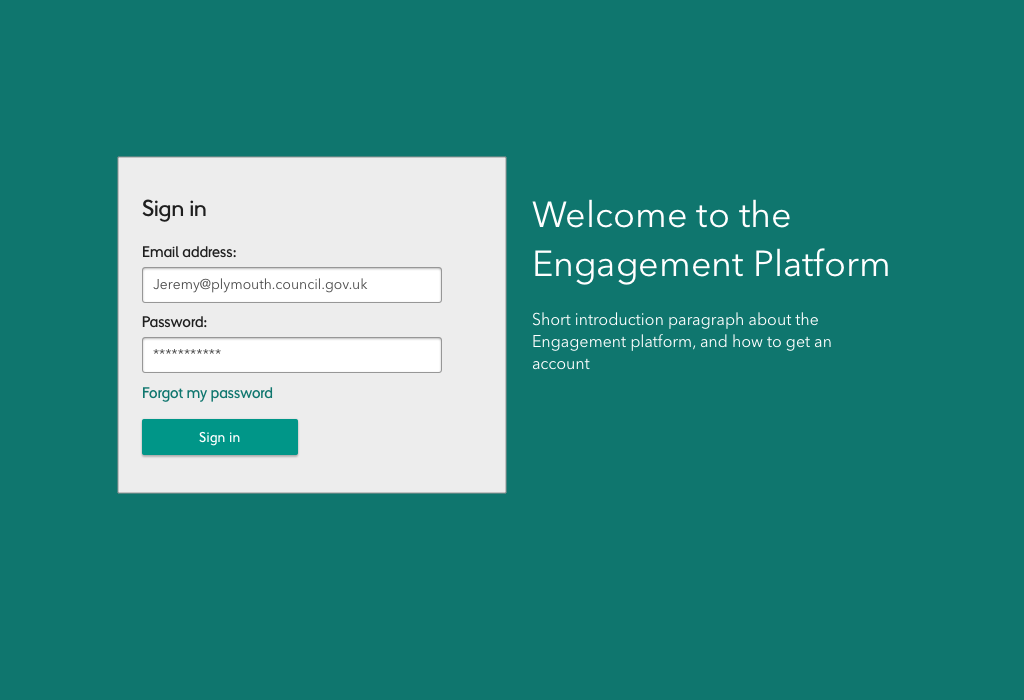
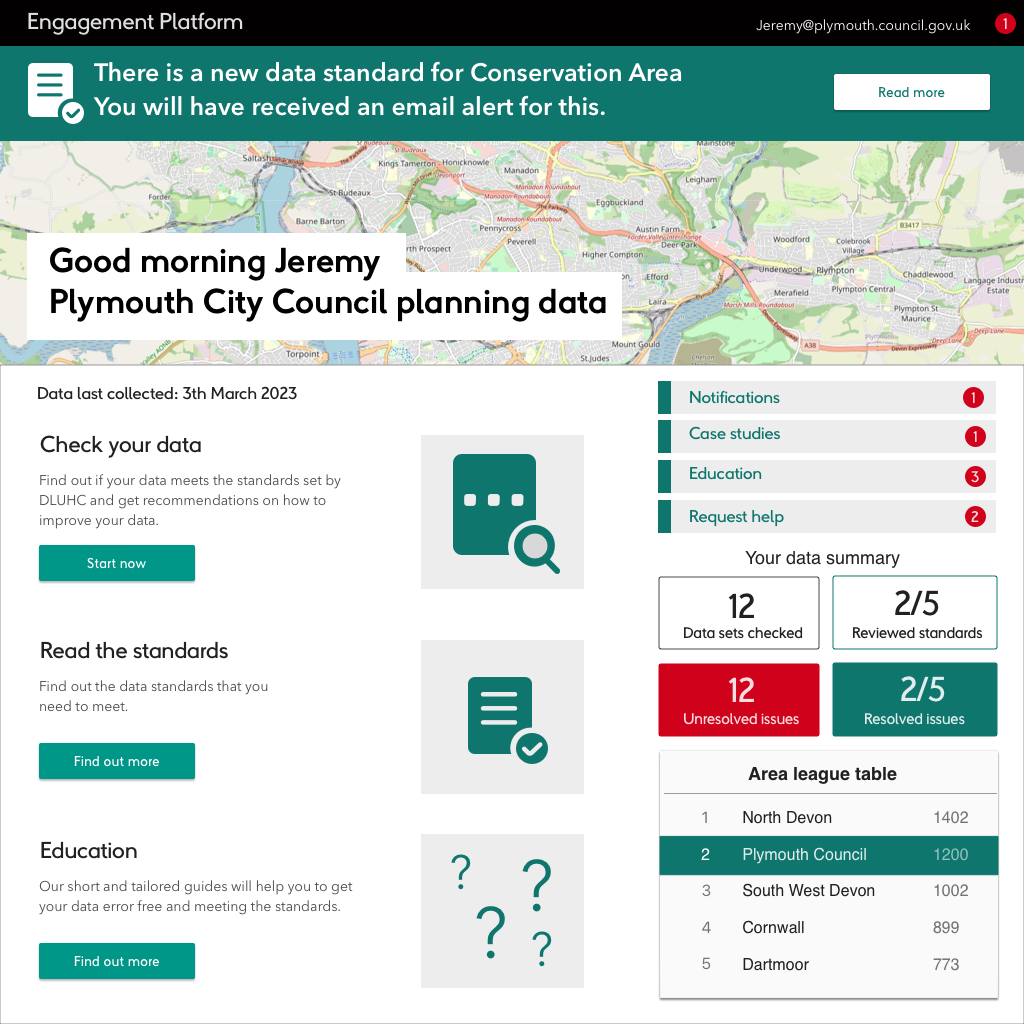
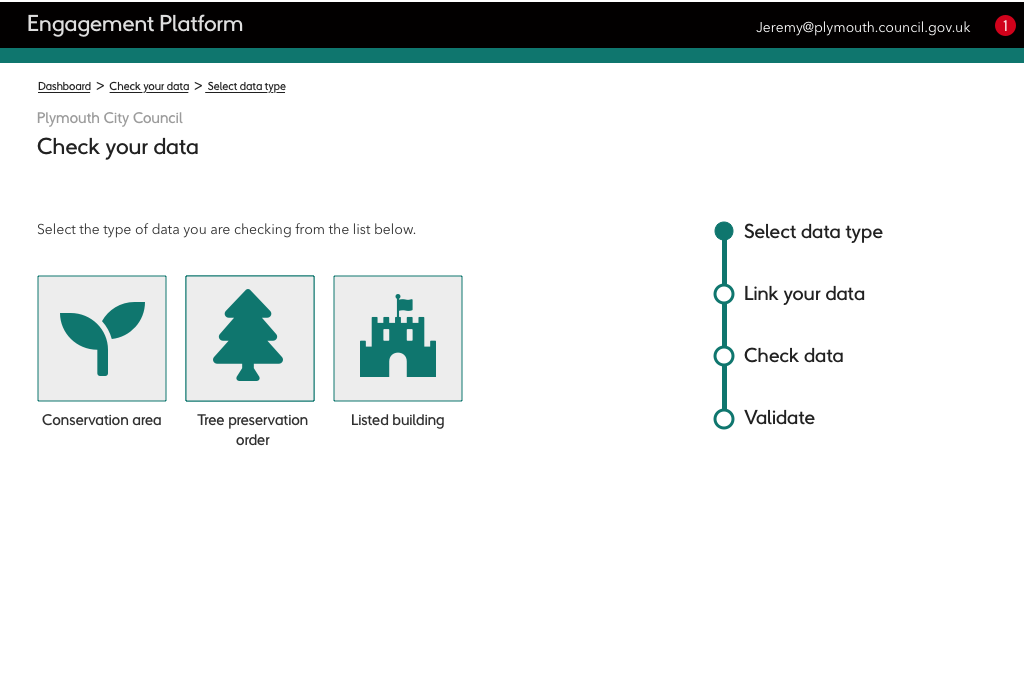
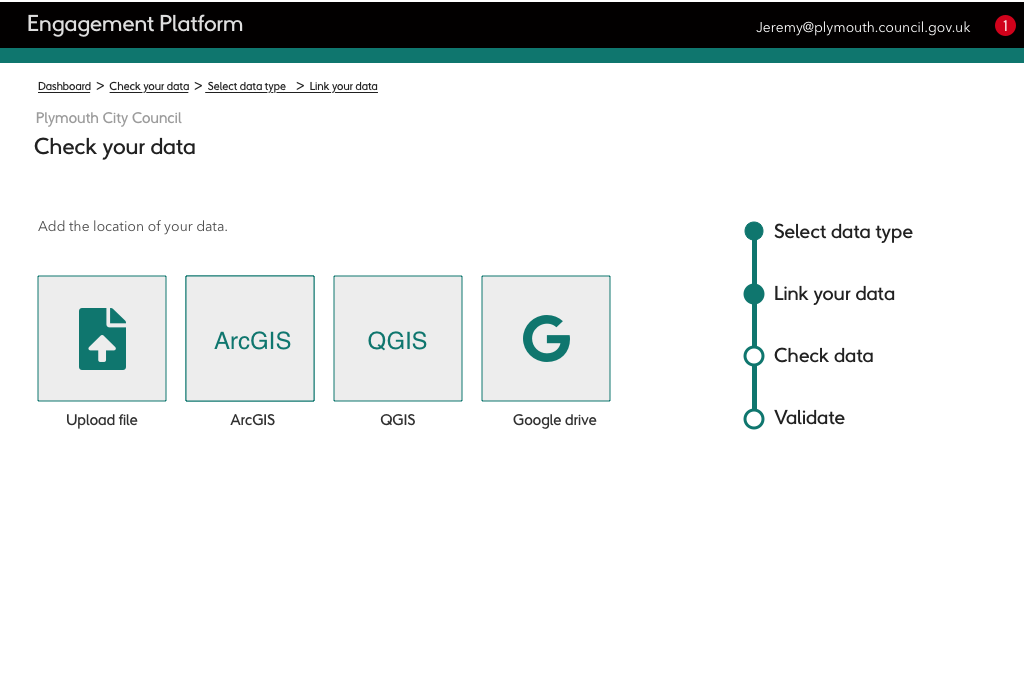
I explored concepts for an engagement platform that would guide local authorities through uploading, validating and maintaining datasets over time.
This involved designing clear, step-by-step flows that reduced complexity and made expectations explicit, particularly for users who were not data specialists.
Improving the live Planning Data service
Alongside this, I worked on improving the live Planning Data platform by identifying usability issues and iterating on key areas of the experience.
- Simplified navigation and replaced confusing breadcrumb patterns
- Improved search usability based on user research insights
- Aligned interface patterns with the GOV.UK Design System
- Promoted guidance to better support data publishers
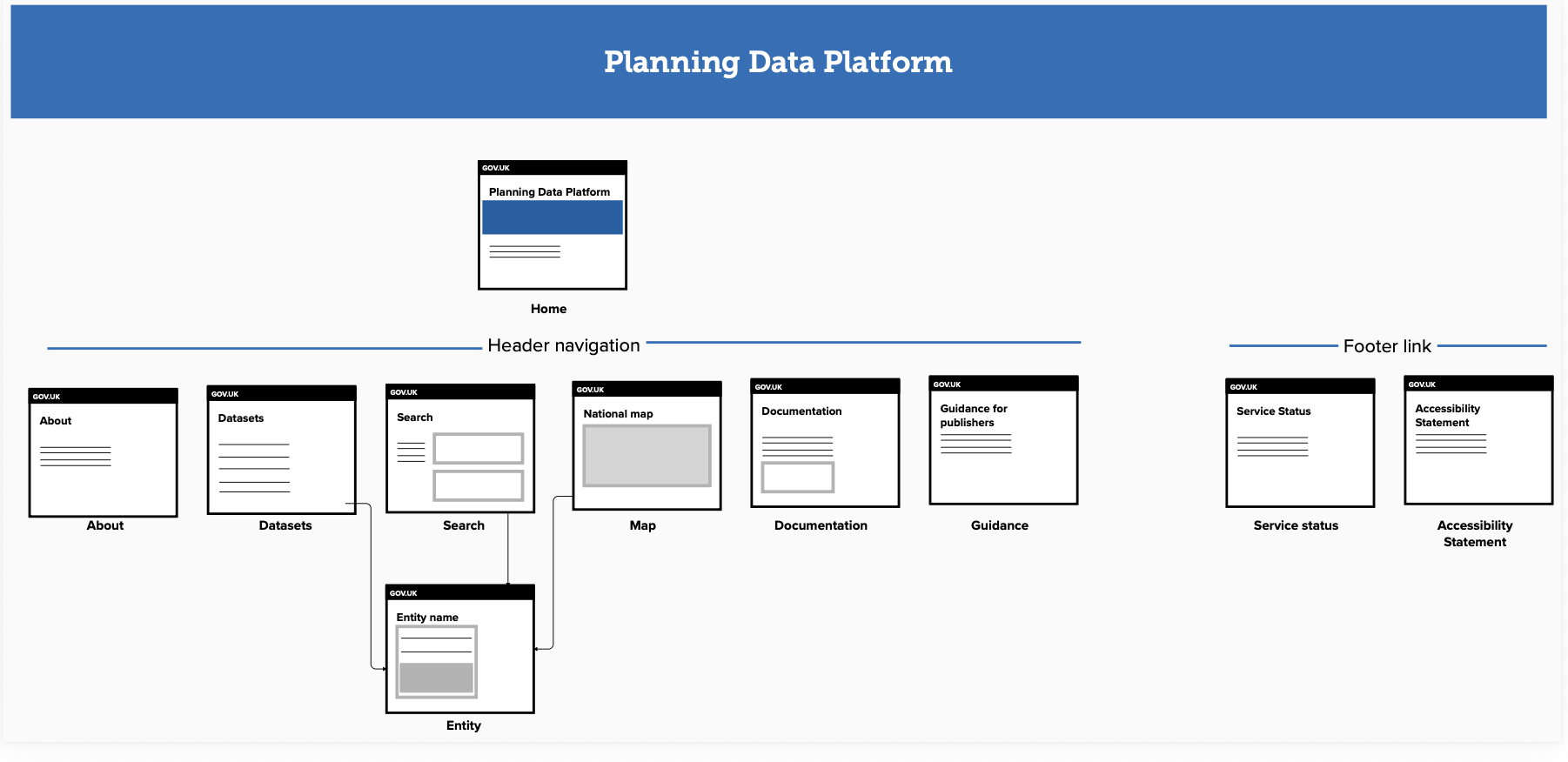
Prototypes were built using the GOV.UK Prototype Kit, enabling rapid iteration and testing with users before implementation.
Outcomes
The work improved how planning data is accessed, understood and maintained across the platform.
By simplifying interaction patterns and strengthening information architecture, the service became more consistent, more accessible, and easier to use for both publishers and end users.
These improvements contributed to a more consistent and scalable planning data platform aligned with GOV.UK standards.
Accessibility and GOV.UK standards
The work followed the government interaction design principles, with a strong focus on accessibility, clarity and consistency.
Designs were developed and tested using the GOV.UK Prototype Kit, then refined through usability testing and collaboration with multidisciplinary teams.
This ensured the service met accessibility standards, aligned with established GOV.UK patterns, and worked effectively for a wide range of users.
What I learned
Designing for data-heavy government services requires balancing accuracy, usability and accessibility. This project strengthened my ability to simplify complex systems into clear journeys within real-world data and policy constraints.
It also reinforced the importance of designing for both technical and non-technical users — ensuring that data is not just available, but genuinely usable.
Selected screenshots from the project work and prototype: